Managing and Measuring Work
 |
 |
 |
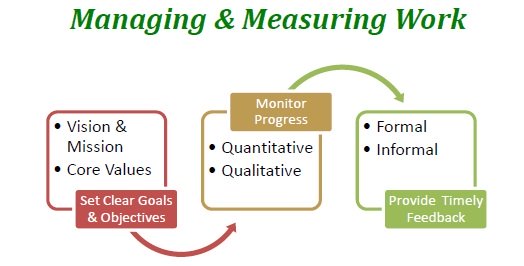
Managing and measuring work explores the critical components all leaders must master. They are critical to the performance management process and include the following:
- Set Clear Goals & Objectives
- Monitor Progress
- Provide Timely Feedback
Neglecting either of these components will prove problematic at annual review time.
Managing and Measuring Work
As a leader, a major responsibility of your role is to manage and measure work, both yours and those of your direct reports.
Therefore, it is incumbent on you to get well acquainted with your company's performance management processes and procedures. Once you are familiar with what is required, it is time to excute what is outlined.
Unfortunately, too many leaders fail to master the skills associated with managing and measuring the work of others. Successful leaders, leaders who lead, understand how important it is to a team's overall performance.
Set Clear Goals & Objectives
Clear goals and objectives identify what is expected and must include metrics or key performance indicators (KPIs) that tell if or when the goal is reached. You need metrics in order to manage and measure work.
Individual (and team) goals and objectives must be aligned with the organization's strategic goals and objectives.
To do this, the organization must identify its goals and communicate them in such a fashion that they are understood to everyone within the organization.
If this is not common practice within your organization, there may be a lot of activity but it will not be productivity. There is a BIG difference.
Productivity is productive activity; it contributes to the mission and helps to move an organization closer to achieving its mission.
Being clear on what is expected BEFORE the performance period begins helps set the foundation upon which solid performance can be built. This includes knowing what your boss expects of you.

Monitor/Track Progress
Ideally, goals should be set by the first day of the fiscal year. (For most organizations, the fiscal year coincides with the calendar year which begins January 1.) Doing so gives the individual the full year to accomplish the goals and objectives.
Once goals and objectives have been established for each individual, you must identify how you will measure what is achieved.
They should include both quantitative and qualitative data which will be used to determine what progress has been made toward reaching the goal.
This allows you and your direct report to discuss progress against pre-set goals aligned with the organizations strategic goals and objectives.
Provide Periodic Feedback
Providing feedback is very important to managing and measuring work and should be given in both formal and informal settings.
For example, I recommend giving impromptu feedback close to the time the person's performance is observed. If it is positive feedback, I will not hesitate to make my comments in the presence of others. If it is constructive feedback, I recommend sharing that one/one.
It is in line with one of Dale Carnegie's principles: "Praise in public. Reprimand in private."
Formally, leaders should meet one/one with each direct report at least quarterly. The purpose of the meeting is to discuss performance: what is going well and what needs to be corrected.
During the one/one is also a good time for you, the leader, to ask for feedback on how you can best help/support your direct report in reaching his or her goals.
Managing and measuring work allows you to discuss progress at intervals, instead of waiting to late for corrective actions to be taken.
A Word From Coach Gwen
Before you go, I feel compelled to share this with you: In my experience, a common mistake some leaders make is not focusing on your entire team. I know, because I made this mistake in one of my leadership roles.
It is relatively easy to manage and measure work for your high performers, AKA your "star" players. Why? Because they make your job easier.
But by managing and measuring work for ALL your direct reports, you will identify what each team member does well, ensure they are in the right position so they can play their position well.
In the words of John C. Maxwell, "You may be able to do some wonderful things with a handful of top people, but if you want your team to do well over the long haul, you've got to build your bench. A great team with no bench eventually collapses."
Not focusing on ALL team members will result in an unforced error. You definitely would not want that, and neither do I.
Want To Know More?
There is definitely no way to effectively manage and measure work if your direct reports are unclear on what you expect.
It is very difficult to inspect what you expect if you are unclear about:
- What Your Boss Expects
- What You Expect (from your team, your boss, your peers, etc.)
There is no way you can effectively meet/beat expectations if you do not know what they are.
These tools will help you: Expectations. If I can offer further assistance, please contact me here.
Virtual (Online) Learning Opportunity
 |
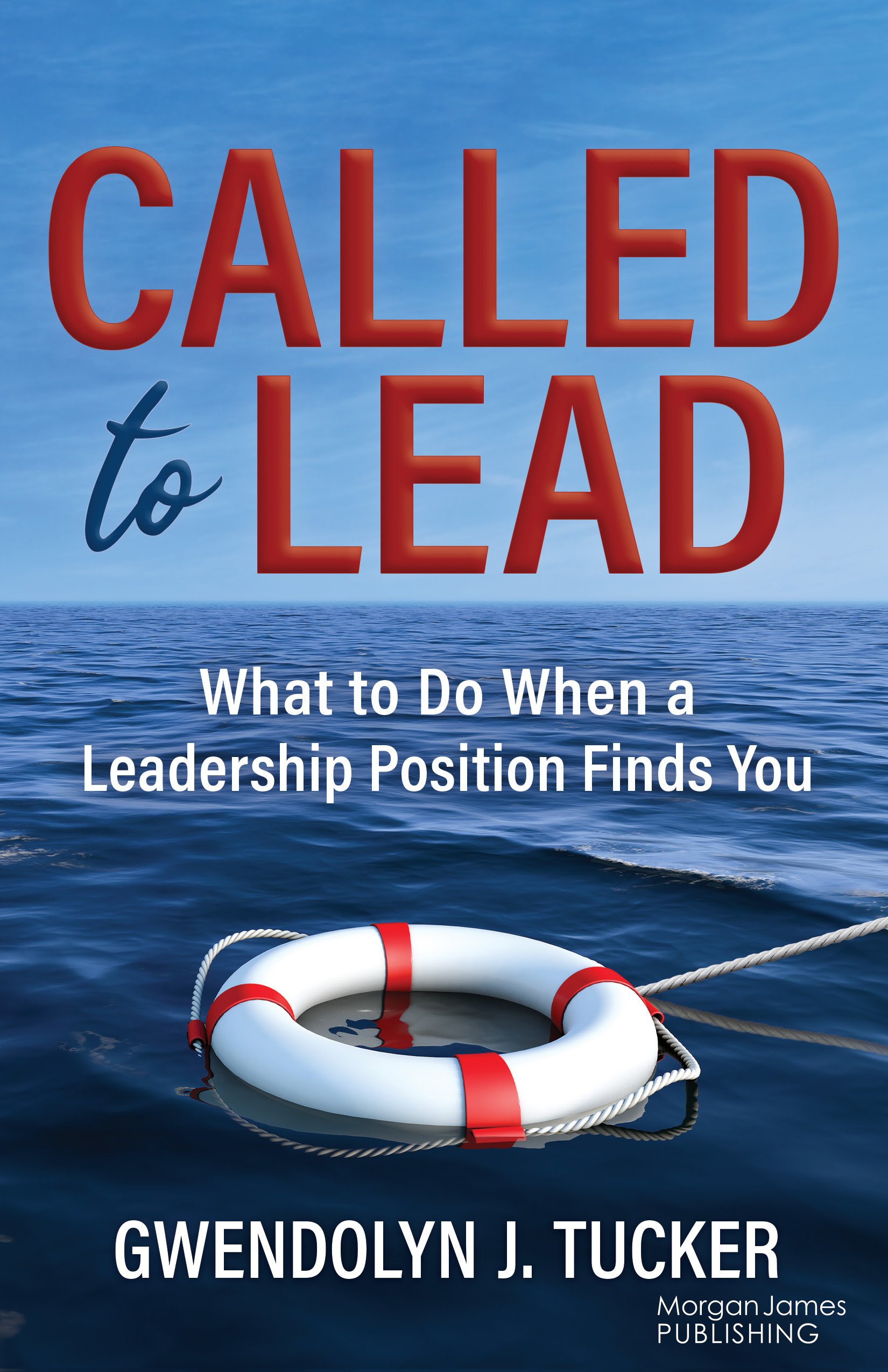
Join me for a focused conversation designed to offer a clear roadmap for what to do when a leadership position finds you—whether you pursued it or it found you.
This session creates space for reflection, real‑world application, and honest dialogue about what it takes to lead with clarity, courage, and confidence.
Whether you’re stepping into leadership for the first time or strengthening your existing leadership muscles, this Lunch & Learn will meet you where you are and help you become the leader you were called to be.
Want to join the waitlist? Do so below.
Bonus Gift
Improve Your Relationship with Your Boss
Did you choose your boss, or did your boss choose you?
Either way, strengthening that relationship is always a smart move.
Wouldn’t you agree?
If so, the Boss Relationship Worksheet is a practical tool designed to help you:
- Communicate more effectively,
- Understand your supervisor’s expectations, and
- Build a healthier, more productive working partnership.
Clarity with your boss starts here.
Share your information in the form below, and your download will be on its way.
Strong leadership starts with knowing how to work well with the person you report to.
After completing the Boss Relationship Worksheet, take a look at the information below. It will prove helpful in showing you how to cultivate a better working relationship with your boss: